
Addiction recovery mein yoga aur meditation ka role practical hai: body ko calm करना, breathing को steady करना, stress response को समझना, sleep improve करना और cravings ke time pause create करना. Lekin यह साफ समझना जरूरी है कि yoga treatment ka replacement नहीं है।
Nasha body aur mind dono ko disturb करता है। व्यक्ति anxiety, anger, restlessness, body pain, poor sleep, low mood और cravings से गुजर सकता है। Counselling, medical assessment, Family Counseling और structured routine primary pillars हैं। Yoga aur meditation इन pillars को support कर सकते हैं, especially jab unhe safe, gentle aur consistent तरीके से किया जाए।
Recovery mein body awareness kyun zaruri hai?

Addiction ke दौरान व्यक्ति अपनी body ke signals ignore करना सीख जाता है: भूख, थकान, pain, anxiety, sleep, heartbeat, सांस. Substance इन signals ko temporarily dull कर देता है। Recovery mein ye signals अचानक strong feel ho सकते हैं। Yoga person ko body ke साथ दुबारा respectful connection बनाना सिखाता है। Simple stretching, breathing aur posture awareness से व्यक्ति notice कर सकता है कि tension कहां जमा है और calm ka अनुभव कैसा लगता है।
Breathing cravings ke time help kar sakti hai
Craving आने पर brain urgency create करता है: “अभी चाहिए.” उस moment mein breathing slow करना pause create कर सकता है। Deep breathing कोई magic नहीं, पर nervous system ko signal देता है कि immediate danger नहीं है। 4-4 breathing, यानी चार count inhale और चार count exhale, beginner ke लिए easy है। Isse decision लेने से पहले कुछ seconds की दूरी मिलती है। Recovery mein वही छोटी दूरी बड़ा फर्क डाल सकती है।
Meditation ka matlab thoughts band karna nahi
बहुत लोग meditation try करते ही बोलते हैं, “Mere thoughts rukte hi nahi.” Meditation ka goal thoughts को forcefully बंद करना नहीं है। Goal है thoughts ko observe करना और उनके साथ तुरंत action na karna. Jab thought आए “sirf ek baar use kar leta hoon,” meditation practice person ko यह देखने में help कर सकती है कि यह thought है, command नहीं। This skill relapse prevention mein useful हो सकती है।
Stress aur sleep par impact
Recovery ke early phase mein नींद और stress बड़ी challenges होते हैं। Gentle yoga, stretching, evening breathing aur guided relaxation sleep hygiene को support कर सकते हैं। लेकिन अगर severe insomnia, panic, hallucination, depression या withdrawal symptoms हों, तो yoga alone enough नहीं है। ऐसी स्थिति में professional help जरूरी है। Safe Zone Foundation की Rehabilitation Centre routine में healthy daily rhythm को important माना जाता है।
Yoga ko punishment na banayein
Kuch लोग recovery में बहुत harsh discipline impose करते हैं: “Subah 4 baje उठो, difficult आसन करो, pain सहो.” यह approach कई patients ke लिए discouraging हो सकती है। Recovery yoga gentle, respectful और safe होना चाहिए। Aim flexibility competition नहीं; aim है body ko stabilize करना और mind ko settle करना। Simple sitting, neck movement, shoulder roll, walking meditation aur breathing भी valuable हैं।
Practical beginner routine
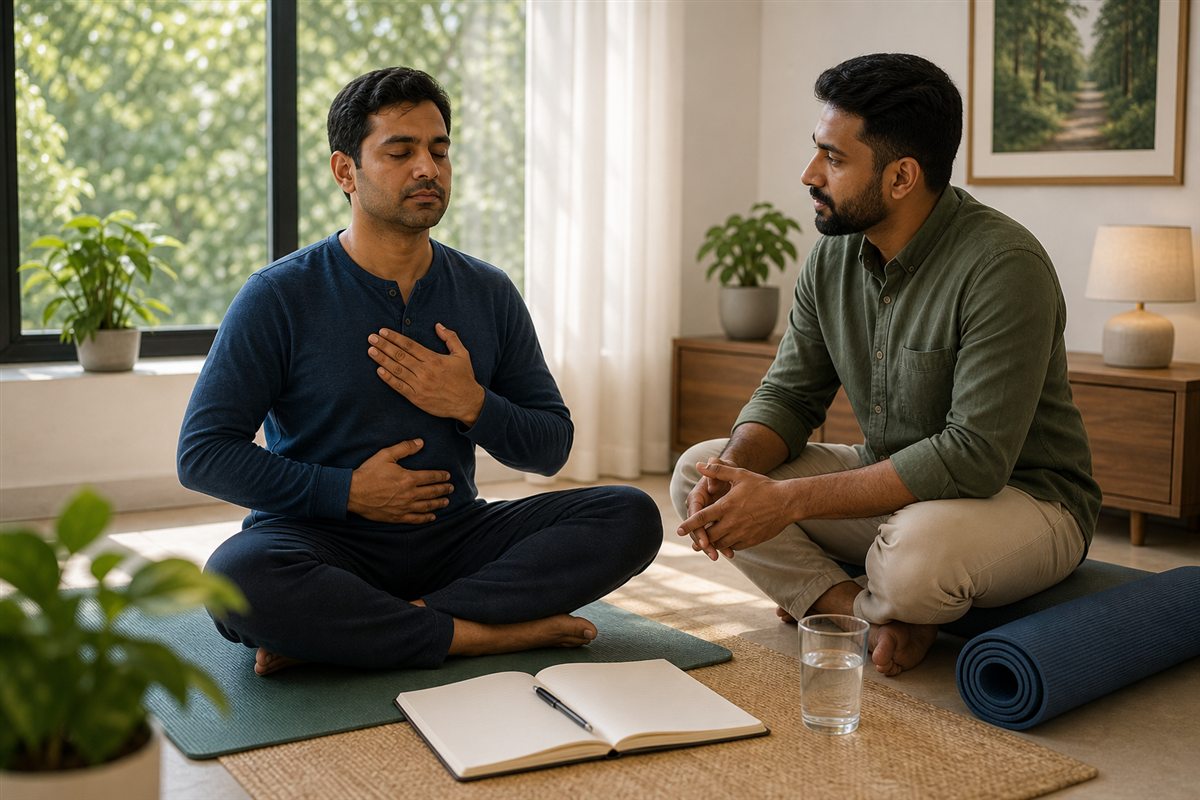
Beginner routine short रखें, ताकि consistency बने। Example:
- सुबह 5 minutes deep breathing.
- 10 minutes light stretching या walking.
- दिन में craving आने पर 2-minute pause breathing.
- शाम को 5 minutes gratitude/reflection writing.
- सोने से पहले phone दूर रखकर slow breathing.
Ye routine counselling, medical care, family support और aftercare के साथ जुड़कर better काम करता है। अकेले yoga se severe addiction solve हो जाएगी, ऐसा promise unrealistic है।
Group activity ka emotional benefit
Yoga या meditation group mein करने से isolation कम हो सकता है। Person देखता है कि बाकी लोग भी restlessness, distraction aur discomfort से गुजर रहे हैं। Group setting accountability देती है। लेकिन privacy और dignity जरूरी हैं; किसी को force करके performance नहीं कराना चाहिए। Recovery mein shame कम करना और participation gently बढ़ाना important है। The Safe Zone Foundation Gallery gives families a real look at centre spaces and activities.
Family ka role
Family ghar par patient ko support कर सकती है: morning walk साथ करना, घर में alcohol/drug triggers remove करना, sleep routine encourage करना, और meditation ko मजाक न बनाना। लेकिन family को यह भी समझना चाहिए कि yoga करने से व्यक्ति instantly ठीक नहीं होगा। Addiction recovery में cravings, mood swings और relapse risk फिर भी manage करने होंगे। Family support, boundaries और treatment follow-up equally important हैं।
Safety points
- Severe withdrawal, dizziness, chest pain या breathing difficulty में exercise न करें; medical help लें।
- Injury, high blood pressure, heart condition या serious weakness हो तो doctor/counsellor से पूछें।
- Breathing practices gentle रखें; extreme breath-holding avoid करें।
- Yoga ko guilt ya punishment की तरह use न करें।
Safety doubts, detox questions aur rehabilitation basics ke liye addiction treatment FAQ bhi helpful starting point ho sakta hai.
Routine helpful hai, lekin plan zaruri hai.
Yoga aur meditation ko counselling, assessment, family guidance aur admission suitability ke saath balance karein.
Balanced recovery approach
Best recovery plan body, mind, family और environment को साथ देखता है। Yoga aur meditation calmness देते हैं, counselling clarity देती है, routine stability देता है, family support accountability देता है, aur aftercare continuity देता है। अगर आप समझना चाहते हैं कि आपके case mein कौनसा support suitable है, तो Safe Zone Foundation se confidential enquiry कर सकते हैं।